[email protected]WhatsApp +86 18002516846

Part examples

Anonymous CNC part examples for medical, IVD, and analytical work

Five part types machined by Shenzhen Kangsenlong Technology. Each note covers the application, material, process, and the tolerance or inspection point that actually decides the quote. No customer names, and no measured results we cannot show.

A material name and a machine envelope do not define a part. These notes describe how a PEEK connector, an IVD multiport block, or a reagent seat is specified when we machine it in Bao'an, Shenzhen. They are composites of part types, not a catalog and not a named customer program.

Photographs, where we show one, are representative shop components already used on this site. A photo is not paired to a named purchase order. If you have a similar drawing, send it with the RFQ checklist.

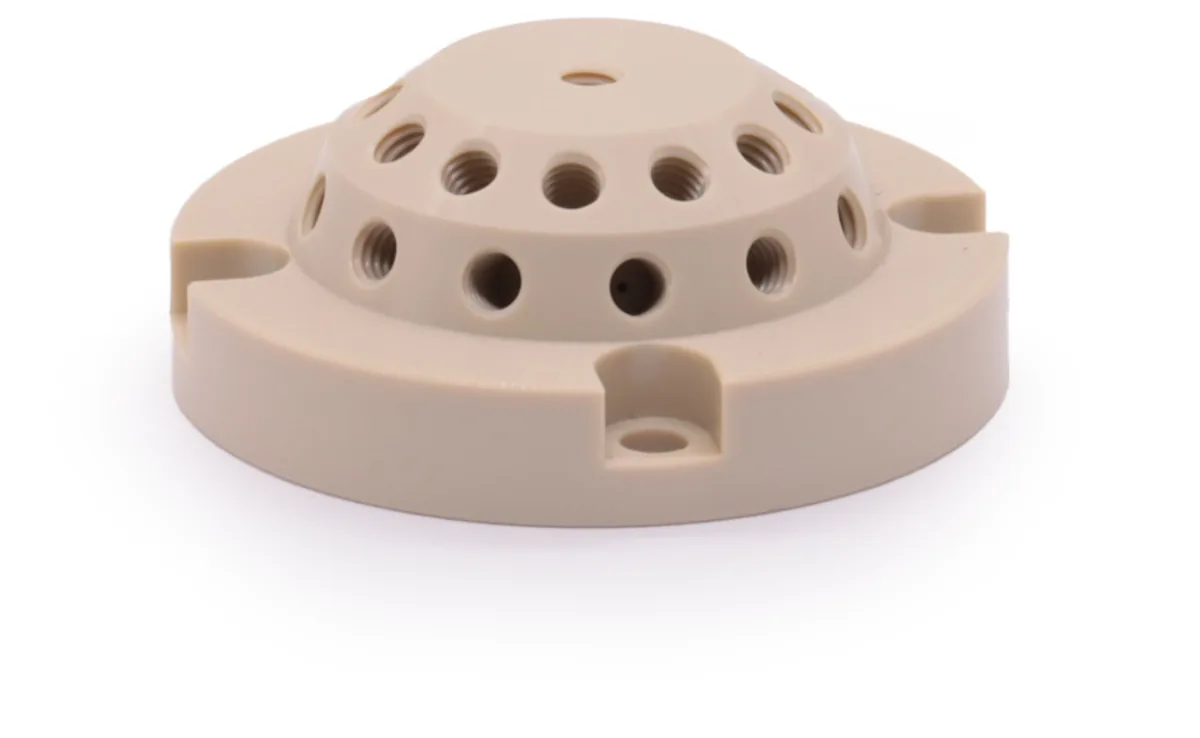
Representative CNC-machined engineering plastic component with holes and a turned profile
Representative component machined in our Shenzhen shop. It illustrates the part family. It is not a named customer order, and it does not by itself establish the material grade.

Example 01 · Analytical instrument

PEEK fluidic connector

A turned and milled connector for a carrier or reagent line on an analytical valve stack. The buyer supplied the drawing. No customer or program name is published.

Application
Connection into a valve or manifold on an analytical instrument. Sealing diameters and a thread are the features that decide whether the part is usable.
Material
Virgin PEEK. Drawings for this part type usually name an unfilled grade in the 450G family, or a filled grade such as 30% glass or 30% carbon when stiffness is required. The grade on the drawing is what we buy.
Process
CNC turning for the body and sealing diameters, then a milling setup for wrench flats or a side port. Thin walls are roughed, stress-relieved, and then finished so the part does not move after it leaves the machine.
Tolerance and inspection
Thread class, sealing-face flatness or runout, and a burr-free condition on any internal intersection the drawing flags. On stable PEEK features the band we discuss is often ±0.025 mm, with selected diameters reviewed toward ±0.010 mm. That is a review range, not a promise on every surface.
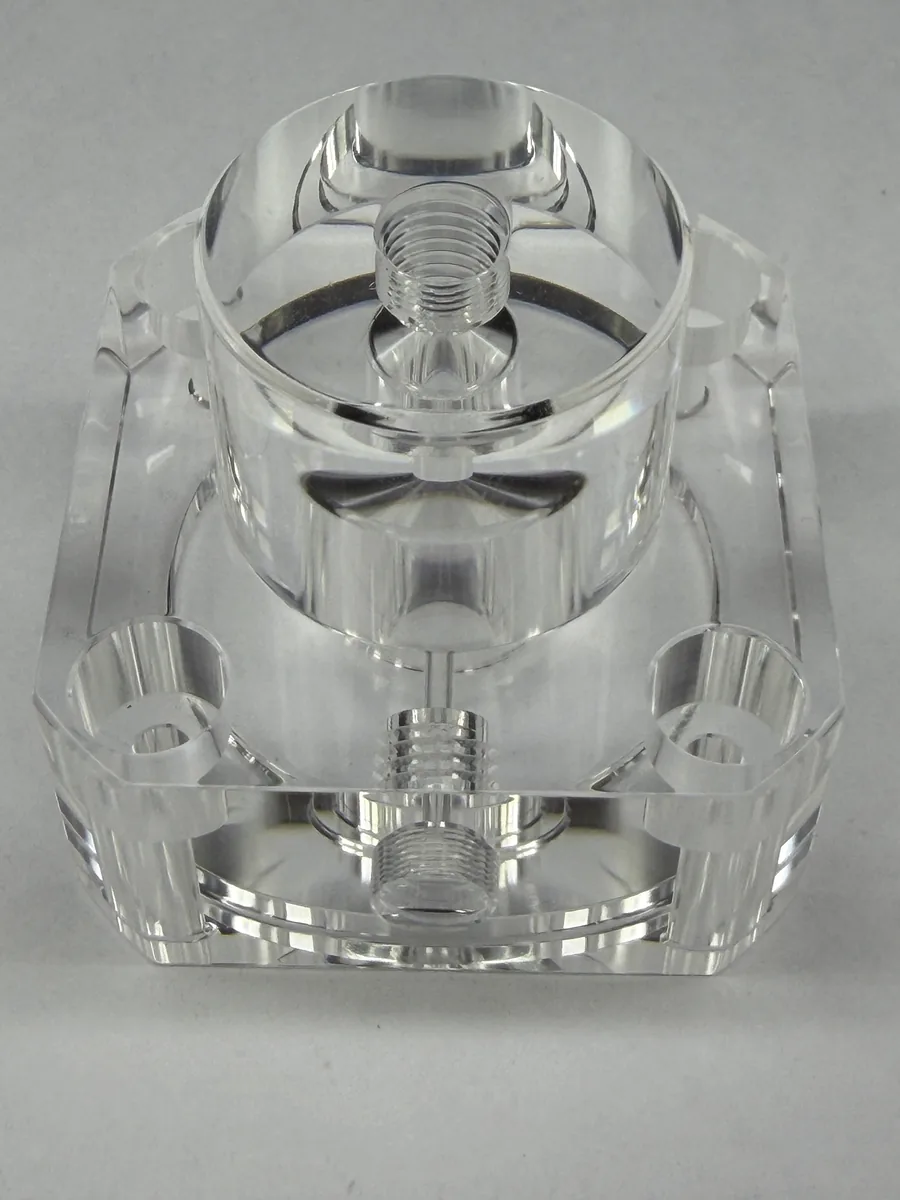
Representative multiport fluid-path component with intersecting ports
Representative component machined in our Shenzhen shop. It illustrates the part family. It is not a named customer order, and it does not by itself establish the material grade.

Example 02 · IVD fluid path

Multiport block for an IVD analyzer

A distribution or observation block inside a benchtop diagnostic instrument. We machine the component. The instrument registration stays with the device manufacturer.

Application
Reagent or rinse distribution, or a clear block used to watch flow, on an in-vitro diagnostic analyzer. Port pattern and sealing lands matter more than the outer profile.
Material
Specified by the drawing. Clear blocks are often cast acrylic (PMMA) or polycarbonate. Metal versions of the same function are commonly 316L. The photograph does not establish which grade a new order will use.
Process
3+2 or 5-axis milling of the port face, cross-drilled passages, and an edge break so a fitting seats. Intersections that the drawing calls burr-free are deburred and checked under magnification. Vapor polishing of an optical face is quoted only when the drawing asks for it.
Tolerance and inspection
True position of the ports to the drawing datums, surface texture on the sealing land, and a visual check of internal intersections. For PMMA, PC, and POM the published starting band is ±0.030 mm, with selected features reviewed toward ±0.015 mm. A 316L version is reviewed in the metal band of ±0.005 mm to ±0.01 mm on stable features.
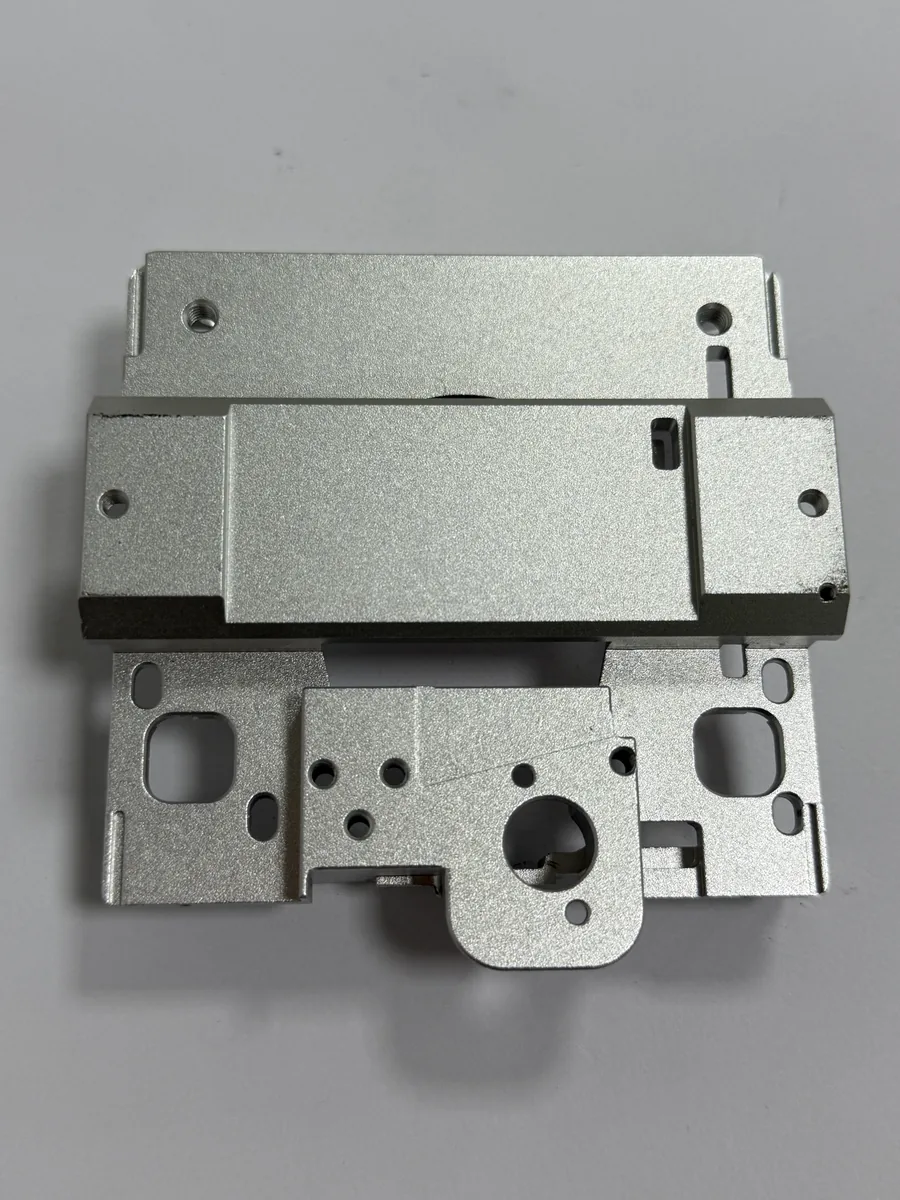
Representative CNC-milled metal housing and components for diagnostic equipment
Representative component machined in our Shenzhen shop. It illustrates the part family. It is not a named customer order, and it does not by itself establish the material grade.

Example 03 · Diagnostic equipment

Metal mounting housing

A milled housing or frame detail that locates modules inside medical diagnostic equipment. The part is structural. It is not a finished device.

Application
Mounting face and fastener pattern for an optics, sensor, or fluid module. The part has to sit flat on the mating frame and repeat across a small batch.
Material
316L stainless steel or 6061-T6 aluminum, whichever the drawing specifies. 7075-T6 or MIC-6 plate comes up when the buyer needs a more stable aluminum blank. Temper is part of the quote.
Process
CNC milling of datum faces, pockets, and the hole pattern. A second rotary setup is used when a face cannot be reached in one clamping. Anodize, passivation, or another treatment is not assumed; list it if the part needs it.
Tolerance and inspection
Flatness of the mounting face and true position of the fastener pattern. CMM or vision measurement, depending on feature size. Published machine positioning is ±0.005 mm on 5-axis work and ±0.008 mm on 3-axis and 4-axis milling. The drawing tolerance is the acceptance standard.

Example 04 · Chemical contact

PVDF or PTFE valve seat

A turned seat or fitting that sees reagent. The buyer chooses the polymer for chemical resistance. We machine the geometry and do not sign off the chemical compatibility.

Application
Valve seat, diaphragm land, or small fitting in a reagent path. The sealing lip and the groove that holds it are the features that fail first if they are left sharp or out of round.
Material
PVDF or virgin PTFE, called out by grade. Filled PTFE is a different material and has to be named. These fluoropolymers move more than PEEK, so they are toleranced more loosely.
Process
CNC turning with light finishing passes and plastic-only tooling, so metal fines are not embedded in the seat. Workholding is planned so a thin lip is not crushed. No anneal cycle is assumed unless the geometry needs it and we have agreed it.
Tolerance and inspection
Groove width, sealing diameter, and the edge condition on the lip. The published fluoropolymer band is ±0.050 mm as a standard starting point, with selected stable features reviewed toward ±0.020 mm. A metal-style ±0.01 mm callout on PTFE is a conversation before it is a quote.

Example 05 · Medical equipment

Titanium or 17-4PH equipment bracket

A small bracket, clamp, or link inside medical or life-science equipment. This is an equipment component. It is not presented as an implantable part.

Application
A mounting ear or clamp that has to clear a mechanism and hold position. Profile and hole position matter. The cosmetic outer shape usually does not.
Material
Ti-6Al-4V (Grade 5) or 17-4PH stainless, per the drawing. If 17-4 strength is controlled, the condition has to be on the print. We do not substitute a grade because it is easier to machine.
Process
CNC milling, deburr, and thread milling or tapping as drawn. Heat treatment and passivation are outside the default machining route. If the drawing requires them, they belong on the RFQ so the route and the lead time include them.
Tolerance and inspection
Profile of the mounting ears, hole position to the datums, and a material certificate when the purchase order asks for one. Stable metal features are discussed in the ±0.005 mm to ±0.01 mm range. Thin titanium sections are reviewed before that band is accepted.

How to use these examples

Match the feature, not the story. If your part seals, mark the sealing face and the thread. If it is a fluid block, mark the port positions and which intersections must be burr-free. If it is a bracket, mark the datums and the holes that locate the mechanism. The grade, the quantity, and the inspection documents still have to be on your drawing.

We machine components for medical equipment, IVD analyzers, and analytical instruments. We do not take over device approval. Material suitability for your reagent or patient-contact claim is confirmed on the project, not by this page.

A similar part

Send the drawing, not a guess.

Email the 2D drawing and 3D model with the material grade, quantity, and the features you will inspect. We will tell you if the example is a fair comparison.